Across Borders and Futures: A Journey Toward Sustainable and Community-Centred Mining

Real progress starts when you listen to yourself and trust that you are capable of more than you imagined.

Mahjoba Shariq poses in her academic regalia in front of a UBC backdrop

Mahjoba Shariq

  • Degree:
    • Master of Applied Science
  • Grad year: 2025
  • Program:
  • Campus: Vancouver

I’m Mahjoba Shariq, a Master of Applied Science graduate whose work sits at the intersection of sustainability, human rights, and responsible resource development.  My interdisciplinary applied science background allows me to approach the mining sector with a holistic perspective, one that values people, land, and long-term community wellbeing.

At UBC, I explored how sustainability frameworks and human rights principles can guide resource projects toward ethical practice. My experience at Teck Resources strengthened this understanding by exposing me to sustainability risk, ethical decision-making, and responsible project planning within the mining industry.

Having grown up in Afghanistan and advanced my education in Canada, I carry a deep sense of responsibility toward both places. Afghanistan is rich in mineral resources and even richer in the potential of its people. I hope to contribute to community-centred mining initiatives that uplift local capacity and create opportunities for women and children. Afghanistan needs strong women who can support development and lead with purpose, and I aspire to be part of that future.

My work is driven by the belief that sustainability and human dignity must guide every decision, in Canada, Afghanistan, and anywhere meaningful change can be made.

Why did you choose to study Mining Engineering at UBC?

I chose Mining Engineering at UBC because it combined applied science, sustainability, human rights and mining, all areas that reflect my values and long-term aspirations. I was drawn to a program where ethical decision-making, environmental responsibility, and community wellbeing are integrated alongside technical learning.

A key moment in my program search was attending an interdisciplinary seminar that explored sustainable mining through cultural and social lenses. Hearing discussions about Indigenous partnerships, community engagement, and the broader impact of mining helped me see how meaningful this field can be.

UBC stood out for its commitment to reconciliation, global impact, and responsible leadership. It offered a learning environment where I could gain the knowledge and confidence to contribute to sustainable initiatives in Canada, and one day apply these lessons to Afghanistan’s mineral sector, which holds enormous potential for community development.

How are you applying the skills you learned at UBC?

My interdisciplinary education at UBC taught me how to analyze complex sustainability challenges through environmental, social, and ethical frameworks. I learned how sustainability risk, human rights, and community-centred project design shape responsible mining practices.

Through my internship at Teck Resources, I applied these skills to work involving sustainability risk assessment, community considerations, and ethical decision-making. This experience helped me understand how mining projects directly influence people, land, and long-term planning.

Beyond technical frameworks, the most valuable skills I gained were communication, cultural awareness and the ability to translate detailed information into accessible insights. These skills are essential not only in Canada’s resource sector but also in Afghanistan, where thoughtful project planning can support economic growth, protect the environment and empower communities, especially women.

Who or what has made your time at UBC memorable?

My time at UBC is filled with moments that shaped both my personal and academic growth. Working on projects related to responsible mining helped me see how applied science can create meaningful impact. These projects reminded me how much potential exists for future community-centred mining initiatives in Afghanistan as well.

The mentorship I received from professors and supervisors made a profound difference. They encouraged me to trust my interdisciplinary approach, ask bold questions, and connect my experiences in Canada and Afghanistan to larger conversations about sustainability and equity.

Outside academics, walking by the water on campus helped me reflect on my goals and visualize the kind of leader I want to become. The support of my peers, people who cared deeply about sustainability, justice, and engineering with purpose made my UBC experience unforgettable.

What advice would you give a student entering Mining Engineering?

Embrace every challenge, they become the foundation of your confidence and growth. Don’t be afraid of the future; shape it. Be active in your learning and your life. Attend seminars, join workshops, and take advantage of the opportunities UBC offers. Build your network intentionally, meet people from different backgrounds, and let curiosity guide you.

Balance your academic journey with activities that bring joy and wellbeing: yoga classes, gym sessions, nature walks, or anything that makes you feel grounded.

Most importantly, build your own brand. Believe in your story, your values and your individuality. Let your experiences in Canada or anywhere your life has taken you, make you stand out. Your perspective is your strength.

How did your studies in the Faculty of Applied Science prepare you for the future of work?

UBC prepared me for the future of work by teaching me how sustainability, community wellbeing, and responsible project management must guide the mining sector. Through coursework, interdisciplinary projects, and my experience at Teck, I learned how to assess risks, evaluate social impacts, and support decision-making that prioritizes ethical and long-term outcomes.

These skills are essential in Canada’s evolving mining industry, and equally important for the future of Afghanistan’s resource sector. I hope to contribute to initiatives that create meaningful opportunities, respect communities, and elevate women’s leadership in mining.

What is next for you?

My next step is to continue building a career in sustainability, human rights and project management within the mining sector. I hope to grow into a strong project manager who can lead initiatives grounded in community engagement, environmental responsibility and ethical decision-making.

While I plan to deepen my experience in Canada’s mining industry, I am also committed to contributing to Afghanistan’s mineral sector in the future. Afghanistan is rich in resources, and its progress depends on capable leaders, women, who can drive development with integrity and purpose.

Alongside my professional goals, I want to support women and children in Afghanistan through initiatives focused on empowerment, education, and community wellbeing. My vision is to contribute to both countries and help build futures rooted in sustainability, dignity, and opportunity.

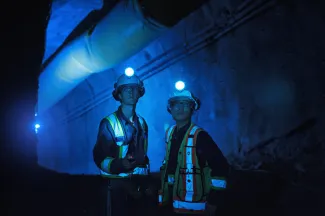
Two UBC mining engineering students at a co-op term at New Gold.

Mining Engineering

UBC’s Mining Engineering program is consistently ranked among the top in Canada. We offer a broad professional degree program that integrates courses on engineering principles, earth sciences, and mining and mineral processing...

Mining Engineering

Discover UBC Applied Science Alumni

Whether you’re a nursing, planning, architecture or engineering graduate, the alumni network is one of the most powerful benefits of your UBC education.

Get Connected

UBC is located on the traditional, ancestral and unceded territories of the xʷməθkʷəy̓əm people (Musqueam; which means 'People of the River Grass') and Syilx Okanagan Nation. The land has always been a place of learning for the Musqueam and Syilx peoples, who for millennia have passed on their culture, history and traditions from one generation to the next.

UBC Crest The official logo of the University of British Columbia. Arrow An arrow indicating direction. Arrow in Circle An arrow indicating direction. Caret An arrowhead indicating direction. E-commerce Cart A shopping cart. Time A clock. Chats Two speech clouds. Facebook The logo for the Facebook social media service. Social Media The globe is the default icon for a social media platform. TikTok The logo for the TikTok social media platform. Calendar Location Home A house in silhouette. Information The letter 'i' in a circle. Instagram The logo for the Instagram social media service. Linkedin The logo for the LinkedIn social media service. WhatsApp The logo for the WhatsApp social media service. Location Pin A map location pin. Mail An envelope. Telephone An antique telephone. Play A media play button. Search A magnifying glass. Arrow indicating share action A directional arrow. Speech Bubble A speech bubble. Star An outline of a star. Twitter The logo for the Twitter social media service. Urgent Message An exclamation mark in a speech bubble. User A silhouette of a person. Vimeo The logo for the Vimeo video sharing service. Youtube The logo for the YouTube video sharing service. Future of work A logo for the Future of Work category. Inclusive leadership A logo for the Inclusive leadership category. Planetary health A logo for the Planetary health category. Solutions for people A logo for the Solutions for people category. Thriving cities A logo for the Thriving cities category. University for future A logo for the University for future category.