"I believe that if we want to inspire and nurture innovative minds, we need to value individuality and support students in taking risks."
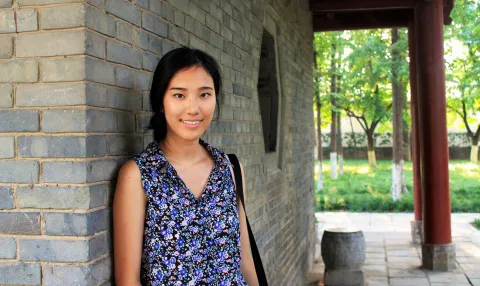
Dolma Tsundu
- Degree:
- Bachelor of Applied Science
- Grad year: 2020
- Program:
- Campus: Vancouver
During her degree, Dolma has pursued projects and initiatives that promote equity and freedom for diverse groups in Canada and around the world. In 2018, she was selected as the Canadian Engineering Memorial Foundation’s Ambassador for British Columbia for her work with underrepresented groups in engineering. She was also selected as a Daughters of the Vote Delegate in 2019, where she represented her federal riding in the House of Commons of Canada. She was later awarded a Rosemary Speirs Leadership Grant from the Government of Canada’s Department for Women and Gender Equality. With this grant, she initiated the “Activism Through Technology and Art” collective, which raises awareness for humanitarian issues.
Currently, she is the CEO and Co-Founder of Flutter Wear (flutterwear.com), a company whose technology promotes a positive and informed pregnancy experience for expectant mothers. Her team has received funding from UBC’s Faculty of Medicine, the Royal Bank of Canada, the Medical Device Development Center, the Canadian Medical Association, and Innovation UBC. She also pitched this project at the Startup of Holland Competition in the Netherlands where it received 1st place. Recently, Dolma was selected as the 2020 Engineers Canada Gold Medal Student Award recipient.
2020 Engineers Canada Gold Medal Student Award

What has made your time at UBC memorable?
The highlights of my time as a student include co-founding Flutter Wear, initiating the Activism Through Technology and Art Collective, directing Women in Engineering UBC, and serving as a Teaching Assistant for APSC 100/101.
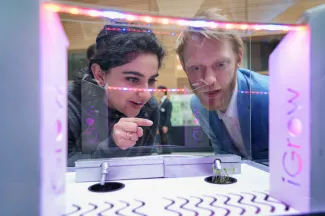
During my semester abroad, the highlights include re-designing a national monument in the Netherlands for greater wheelchair accessibility, creating an interactive art installation that was exhibited in the Kunsthal contemporary art museum, and inventing a rehabilitation device that was featured at Dutch Design Week. Looking back, these are all things that I never would have imagined myself being able to do at the beginning of my degree. It has taken small, incremental steps of pushing myself outside of my comfort zone, but I’m incredibly grateful that I did. However, without the support of incredible people I have met along the way, none of this would have ever been possible.

Tell us about your experience in your program. What have you learned that is most valuable?
Integrated Engineering helped me to see myself first as an individual and then as an innovator. I was never restricted nor defined by my degree. Since I had the freedom to tailor my degree, it pushed me to think critically about my interests and dreams. The program encouraged me to come up with my own ideas and offered the breadth of knowledge required to see them through to reality. As a result, I have had the opportunity to work on several technical projects that widened the boundaries of my knowledge and creativity.
What advice would you give a student entering your degree program?
I believe that if we want to inspire and nurture innovative minds, we need to value individuality and support students in taking risks. I have struggled with the culture of conformity that exists within engineering. However, by pursuing projects and initiatives that were aligned with my values and passions (but deviated from the norm), I began to realize that the facets of my life that made me feel out of place, or seemed completely unrelated to engineering, were actually my strengths. Therefore, I would challenge engineering students to define themselves by what they value and care for as an individual, before defining themselves by their degree. Build the courage to stay true to what you believe in and don’t let go of what you love; the rest will follow.
What are your immediate and/or long-term plans for the future?
I am currently pursuing Flutter Wear to improve pregnancy experiences and outcomes through digital health innovation. I am also part of the 2020 cohort of the Cansbridge Fellowship, a global leadership program designed to help young Canadians innovate across borders. In the long-term, I hope to contribute to initiatives that promote equity, freedom, and justice for diverse groups in Canada and around the world. Regardless of the capacity in which I will do so, I am committed to continuing to learn, grow, and adapt to safeguard the planet we inhabit, mobilize the people around me, and ultimately, take on the global challenges we face as humanity.
What are your future plans to make a difference in our world?
I hope to make a difference by working on projects that transcend international boundaries and transform people's minds, hearts, and lives for the better.
I would especially like to create experiences with art and/or technology that lead to greater awareness and concern for how one’s actions can impact others.
I have found that I am the most driven, creative, and inspired when I work on projects that focus on lifting minority women, people with disabilities, and people living in poverty. However, regardless of where I will be or what I will be doing, I hope to be someone who challenges herself, someone people can look to for support, and someone who chooses to rise for others.

How has your identity informed your academic and professional experiences within your field at UBC and beyond?
I am a Tibetan-Canadian woman. My grandparents were Tibetan refugees in India, which is also where both of my parents immigrated from. While I have made conscious decisions not to make my ethnic and racial background a focal point of my academic and professional experiences, I am still learning what this means for me moving forward as a creator and an advocate. However, I do believe that my identity has helped to instill in me a strong desire to live with compassion, promote human rights, and protect individual freedoms.
My family's stories have also pushed me to fight for what I want and what I believe in, which I imagine will continue to permeate all areas of my life.